Wednesday, October 22, 2008

What is Biomass. We are Biomass.


In a recent Science Daily article on fuel production I learned about the economics of some alternative methods of production

What is biomass. Well it is an organic non-fossil material collectively. Essentially biomass is a term to plainly reference the mass of any and all organisms dead or alive that can then be used as a fuel. a wood burning stove or fire is an example of biomass for instance. You may ask why is this important? mmyess? Well it has come to my attention the Liquid fuels can now be produced from biomass in a very economic fashion. In fact even if all the raw materials are imported from other countries the process and procedure would still be economical. This little fact was found through many carefully conducted case studies by Robin Zwart and crew in the Netherlands (of course) for the ACS journal of Energy and Fuels.
These case studies were conducted using the biomass to liquid fuel technique (the most efficient technique around thus far). After meticulous testing Zwart and his collegues concluded that high-quality liquid fuel could be produced from imported biomass for about 2.60 a gallon, with a total of 60$ a barrel.


Man we need to start tapping into this resource. Imagine a world where composting is only a small portion of biomass recycling. I can see it now. eat a banana for breakfast, put the peal in my car and drive...

The full article can be found at Science Daily here

Thursday, October 16, 2008

Portugal Steppin' Up Yo Game

So I recently did a post on Wind Power and I was so intrigued that I researched a bit further on the Portugal's wind power initiative that I had to do a follow up and give you readers a site to look up this kind of information. The National Wind Watch site I have found to be incredibly useful. GOOD LUCK

Global Warming and You and Me

Upon reading a recent post on the Bioneers website (great source of enviro-news), I beacame a little more aware of the staggering statistics on Global warming. In the article entitltled, Stepping Back from The Brink Of Global Warming, the damage is measured and computed, and in turn, broken down and classified into managable groupings.


Hey Reader, did you know???:

The US is 5% of the global population, but 25% + of the global greenhouse gas emmission (direct cause of depletion of our so covated ozone).

  • Typicall, your food travels 1500 ft to 2000 ft from farm to plate.

Agriculture generates 8% of our greenhouse emmissions.

100% wind and solar power is a viable option 20-30 years down the road.

...But assuming we made it an emergency mandate to establish 100 % solar and wind tommorow we would reduce greenhouse gas emissions by a solid 50% +.

Along those lines.....

Places like Portugal are starting to implement strategies similar to this plan of action. They recently installed a wind power initiative in which 750,000 homes with be juiced by wind energy. Portugal is clearly trying to move up in the renewable energy resource elite, a chic club that only certain EU members have achieved as well as the likes of Denmark and Spain. This is truley class act by Portugal, i'll research and tryto post my findings on their operation as well as similar ones.


To read more posted by the Bioneers and check out their website

Click Here


Their is also a Bioneers conference this weekend on the CU Boulder campus. I will be attending select lectures with a few of my peers. Hope to see you there!

Thursday, October 9, 2008

Surfs Up


Of the many potential alternative resources to fossil fuels, one possibility is typically not talked about. Turning ocean energy into electrical energy. What may seem far fetched to some is also viewed by many scientists as the nations most untapped renewable resource. Could we be overlooking a crucial component to a mass that takes up nearly 76% of the earths surface?

Many companies are now starting to think so. The Wall Street Journal recently published an article exploring the possibility of such a thing and the research companies like Chevron are well away in exploring. There are many theoretical ways to tap such a resources though there are only a couple being implemented already, in our world today. One small firm, Ocean Power, has produced a buoy based system driven by vertical movement and pressure sensitive pistons. The buoy in simpler terms takes the vertical movement of the waves and through pistons within the buoy is able to convert that movement in to electrical energy. Another attempt to tap our our oceans energy is being done by Verdant Power. Verdant Power is exploring the possibility of tapping into the possibility of our earths tides as a source of power. In New York's East River, Verdant Power has positioned in-water turbines that take the movement of the tides in and out and convert it to energy (much like a turbine system found at a dam).


While it is very exciting to see companies of all shapes and sizes attempt to explore potential resources, one thing is still unclear. How will something like this ever be done at a magnitude that will a large effect. And how will that large effect not also inversely have a large impact on the billions of life forms co-existing within the very resource. It seems very clear to me that our research can not be complete without researching that entire realm of impaction.


To read the article Click Here

Assessing the Endangered Species Act

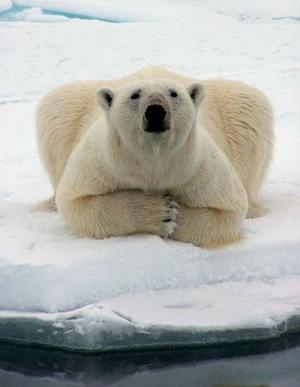
In an article posted on NewScientist.com, a comprehensive critique of climate change and analysis was taken. The article notes that the US Endangered Species Act posted earlier this year has over 17,000 species classified as endangered. In a playful manner the article questions why the polar bear (#1 on the list) is getting all the hype and attention. Are not all the other 16,999 species of equal importance. By no means is this an actual argument.

To understand the Endangered Species act one should know what analysis went into produce it.

Each animals survival had to be assessed in so many words. How they reproduce, how they feed, How they raise young, et cetera. Here are a few examples of those aforementioned criteria. There were 90 criteria in total.
  • Requirements for a specialized habitat: some amphibians depend on a stream or pond, so if that dries out there is no way they can survive.
  • Specific environmental tolerances: many corals cannot survive if the water temperature or pH exceeds a certain threshold.
  • Dependence on environmental cues: many species depend on changes in day length or rainfall to start breeding
  • Dependence on interactions with other species: without prey a specialized predator cannot survive; lichen depend on trees, and many plants on their pollinators;
  • Ability to disperse: as their historical habitats become increasingly hostile, species will need to move to new territories but may not be able to do so if there is something - a body of water, perhaps - in their way.
The researches then looked at all the criteria and which species would be affected by these. Then they also had to pinpoint the location of each species and how climate change would effect each location. 

Is it getting harder to do the Endangered Species Act each year?
Is it our faults?

Brass Tax: Look it Up

1/2 of all amphibians
1/3 of all birds
2/3+ of all corals  assessed are susceptible to climate change.

What protection methods should be used when nearly every ecosystem and ecological entity is at threat?  When even our own species is inevitably at threat?


To check out this article  Click Here!